
Facility managers today spend only 35% of their time doing the hands-on work they were trained for—repairing equipment, optimizing systems, and ensuring building performance. The remaining 65% is consumed by administrative burden: triaging work orders, monitoring dashboards, and managing compliance documentation. This inefficiency is frustrating for facilities teams, and even worse, it leaves billions of dollars in potential energy savings on the table. This administrative burden also makes it nearly impossible for facility managers to do more with less in an era of labor shortages and rising energy costs.
This is why we’re excited to announce our investment in Noda, the company bringing AI agents to facilities management.
Turning data into action
Noda automates the administrative workstreams that bog down engineering teams, unlocking operational efficiency across the built environment. By ingesting utility data, meter and submeter data, IoT sensor feeds, and building management system (BMS) data, Noda deploys AI agents that can automate demand management, optimize HVAC systems, identify energy project opportunities, detect anomalies, automate work requests, and produce portfolio-wide reporting—all without requiring constant human oversight.
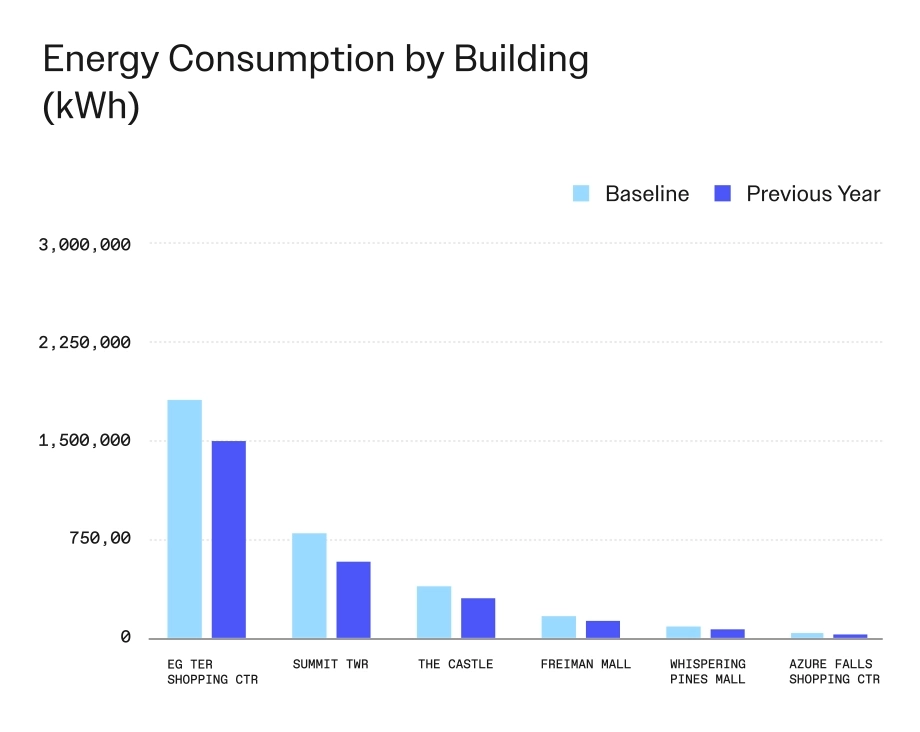
The impact is immediate and measurable, as illustrated in Noda’s internal case studies. At the Hilton Los Angeles Airport, for example, Noda identified several issues contributing to low plant efficiency, including overpumping, poor differential temperature setpoints, and cycling chillers due to failed variable frequency drives and bad sensors. By adjusting setpoints and reducing chiller cycling, Noda’s AI recommended fixes that saved the property $42,000 over just three months. Similar interventions at other Hilton properties—from Embassy Suites Chicago to the Hilton Barbados—have delivered savings ranging from $23,000 to $38,600 annually per building.
These aren’t one-off optimizations. Noda is built to continuously monitor, learn, and improve building operations at scale. The Noda software platform currently serves 120+ blue chip clients including CBRE, Blackstone, Four Seasons, Hilton, JLL, and Zeller, managing the operations of over 1,000 buildings. With 93% gross revenue retention and 106% net revenue retention, Noda’s customers are not only staying—they’re expanding.
A massive market at an inflection point
The opportunity Noda is addressing is enormous. Commercial building owners spend $150 billion annually on facilities management labor and $36 billion on energy management and engineering. Yet despite $11 billion in achievable energy efficiency savings available to commercial buildings, adoption has lagged because manual processes make it too difficult to identify, prioritize, and execute on these opportunities.
Several tailwinds are converging to change this:
- Rising energy costs and volatility. With AI data centers driving unprecedented electricity demand growth—McKinsey predicts data centers alone could add 125 GW of capacity to the grid if they curtail load by just 1%—commercial electricity prices are rising and utilities are increasingly incentivizing demand flexibility.
- Labor shortages in facilities management. One in three facilities management roles remains unfilled, and the average age of facility managers is over 50. Buildings are getting more complex, but the workforce isn’t growing to match.
- Overcomplicated building systems. Modern BMS systems can generate thousands of alerts. Without intelligent triage and prioritization, these alerts create noise rather than insight.
- AI agents reaching an inflection point. Generative AI and agentic systems can now replace administrative labor in ways that weren’t possible even two years ago. Noda is at the forefront of this transformation, having already validated its AI’s efficacy through a Department of Energy study showing it can reduce HVAC load by up to 40% while maintaining comfort and avoid $60,000 in costs across just two buildings in six months—all without reprogramming local controllers or requiring human intervention.
A founder who’s done this before
What gives us confidence in Noda’s ability to execute is CEO Kate Henningsen. Kate is no stranger to building climate tech companies. She co-founded Arcadia, a climate tech unicorn that brought clean energy to consumers, where she served as COO for eight years and built the company’s data layer. Her “earned secret” from that experience was recognizing that enterprise clients won’t act on data unless it’s productized into actionable workflows. This is exactly what Noda’s AI agents deliver.
Kate is an experienced operator who had a front-row seat to hypergrowth success, and she previously ran a similar acquisition and integration strategy when Arcadia acquired Urjanet in order to significantly expand its data coverage. But Noda isn’t just another growth challenge for Kate. This is her first time as CEO. It’s her chance to prove herself in the driver’s seat with Arcadia as the benchmark. At Noda, Kate is supported by a senior leadership team with deep expertise across building systems, AI, and enterprise go-to-market, including operators from Siemens, KPMG, the University of Southampton, and Buildings IOT.
Building a better world
At Building Ventures, we believe convenience, efficiency, and sustainability aren’t competing priorities—they’re complementary. Noda enables facility managers to do the hands-on work they love while AI handles the administrative burden. The company helps buildings operate more efficiently, reducing energy waste and carbon emissions while saving money. And by making demand more flexible, Noda helps ease grid constraints at a time when electricity infrastructure is struggling to keep pace with demand.
Unlike other seed-stage investments, Noda doesn’t need to prove it can win enterprise clients—it already has 120+ of them across managed properties, corporate owners, hospitality, retail, industrial, and data centers. The company simply needs to expand within existing accounts and continue winning new logos as its AI agents prove their value.
For all of these reasons, we’re thrilled to co-lead Noda’s Series Seed alongside Totol Capital with participation from The Venture Collective and Keyframe Capital. Kate and her team will use this funding to deploy AI agents across the company’s existing customer base and expand sales and marketing efforts to convert the qualified pipeline the team has already built. With seven large enterprise pilots underway—including Jamestown, Cleveland Clinic, Johnson Controls, and Lincoln Properties—and a product roadmap that involved the launch of additional domain-specific agents in the first half of 2026, Noda is positioned to triple pricing per building over the next three years as they prove additional value.
The entire Building Ventures team looks forward to working with Kate and the Noda team as they deploy AI agents to unlock operational efficiency across the built environment #forabetterbuiltworld.
Learn more about Noda here.